Building Institutional Memory That Outlasts Individuals
Your firm's value depends on knowledge staying in the firm when people leave. Here's how to build memory that doesn't walk out the door.
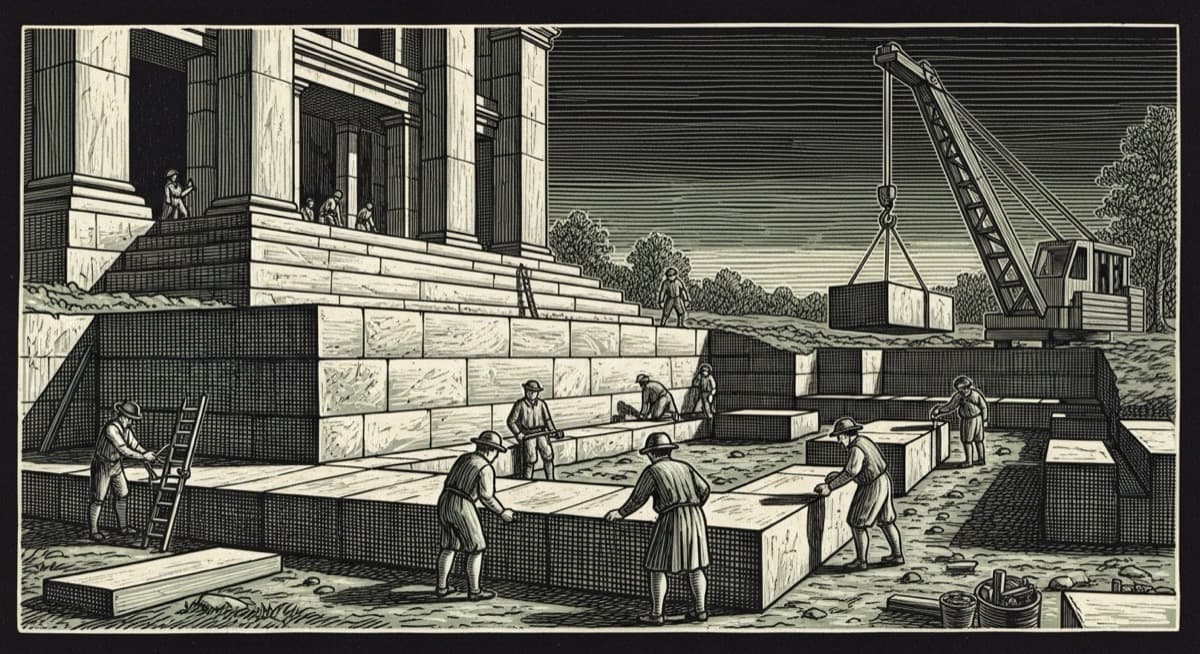
The Departure Test
Imagine your most knowledgeable person gives notice tomorrow. Two weeks from now, they're gone.
How much of what they know walks out with them?
For most firms, the honest answer is "a lot." Years of client history. Unwritten processes. Relationship context. Decision rationale. All the things that make the firm work well, stored in one person's head.
This is the problem of institutional memory. Or rather, the lack of it.
Why Individual Memory Dominates
Firms are built by people. In the early days, everything lives in the founders' heads. That's fine. There's no alternative.
But as firms grow, the habit of head-based knowledge persists. New hires learn from colleagues. Knowledge passes person-to-person. Documentation exists but doesn't capture everything. The deep understanding stays individual.
This happens because individual memory is the path of least resistance. Writing things down takes effort. Building systems takes more effort. People are busy with client work. Knowledge management feels like overhead.
So the knowledge stays in heads. Which works fine until those heads leave.
The Institutional Memory Gap
The gap between what individuals know and what the institution knows creates problems beyond departures.
Scaling bottlenecks. When knowledge lives in individuals, those individuals become bottlenecks. They're the only ones who can answer certain questions or handle certain situations. Growth means more dependency on fewer people.
Onboarding inefficiency. New hires learn from whoever's available, absorbing tribal knowledge that may or may not reflect best practices. Each hire gets a different version of institutional knowledge.
Inconsistency. When different people have different understanding, quality varies. The client experience depends on which person they happen to get.
Valuation impact. Firms with strong institutional memory are worth more than firms dependent on key people. Buyers pay for systems, not for hoping individuals stick around.
From Individual to Institutional
Building institutional memory is a shift from default behavior. It requires intentional systems.
Capture as a habit, not a project. Annual documentation initiatives don't work. Knowledge capture has to be continuous, built into workflow rather than separate from it. Every significant decision, client insight, or process evolution should be recorded as it happens.
Multiple formats for different purposes. Written documentation works for procedures. Recorded explanations work for rationale. Scenario libraries work for judgment. Different types of knowledge need different capture methods.
Reinforce to retain. Information captured but not reinforced decays. Institutional memory isn't just about storage, it's about keeping knowledge active across the organization.
Make retrieval easy. Captured knowledge that's hard to find is almost as bad as uncaptured knowledge. Organization, search, and surfacing matter as much as capture.
The Judgment Layer
The hardest part of institutional memory is capturing judgment, not just steps.
Procedures can be written down. Steps are explicit. But the judgment that makes experts valuable, knowing when to escalate, how to read a situation, which exception applies, that's harder to externalize.
Yet judgment can be captured. Through scenario libraries that document how experts handled tricky situations. Through decision frameworks that make reasoning visible. Through case studies that preserve context and rationale.
The goal isn't to eliminate the need for judgment. It's to give everyone access to the judgment patterns that currently live only in a few heads.
Systematic Knowledge Transfer
When people leave, knowledge transfer usually happens in a rushed two-week window. That's too late and too short.
Institutional memory should make departures non-catastrophic because the knowledge is already in the system. The departing person isn't the primary source, they're one of many people who knows what the institution knows.
This requires continuous knowledge transfer, not just exit transfer. Ongoing reinforcement, cross-training, documentation review, and knowledge testing keep memory distributed rather than concentrated.
The Technology Question
Technology can help, but it's not the answer.
Knowledge bases and wikis are useful, but people don't read them. CRMs capture some client context, but they miss the judgment layer. Document management stores files, but storage isn't memory.
The technology that matters is the technology that keeps knowledge active: systems that surface relevant information at the right time, test whether people know what they need to know, and reinforce before forgetting happens.
Codex is designed for this purpose: turning documented knowledge into active institutional memory that lives in people's heads, not just in files.
Building the Muscle
Institutional memory is a capability that develops over time. It requires habits and systems, not just tools.
Make knowledge sharing a cultural value. Hoarding knowledge should be seen as a failure, not job security. Spreading knowledge should be recognized and rewarded.
Build capture into workflows. Don't rely on people to remember to document. Build prompts and requirements into the natural flow of work.
Test regularly. Know whether people actually know things. Testing reveals gaps before they become problems.
Protect reinforcement time. Knowledge that isn't reinforced decays. Build time for reinforcement into schedules, not as an extra but as essential maintenance.
Track key person risk. Know where knowledge is concentrated. Identify the areas where a single departure would cause problems. Prioritize those for knowledge distribution.
The Long-Term Payoff
Firms with strong institutional memory have advantages that compound.
They onboard faster because knowledge is systematic rather than tribal. They scale better because individuals aren't bottlenecks. They maintain quality because standards are shared. They retain clients through transitions because relationships aren't personal fiefdoms.
They're also more valuable. A firm that runs on systems is worth more than a firm that runs on specific people. Buyers can see a future that doesn't depend on hoping key individuals stay.
Building institutional memory is a long game. The firms that play it build something durable. The ones that don't stay vulnerable to every departure, every retirement, every illness.
The knowledge in your firm should belong to the firm, not just to the people who happen to work there today. That's what institutional memory means. Building it takes effort. Not building it is more expensive.